Prisoners with Special Needs and Human Rights


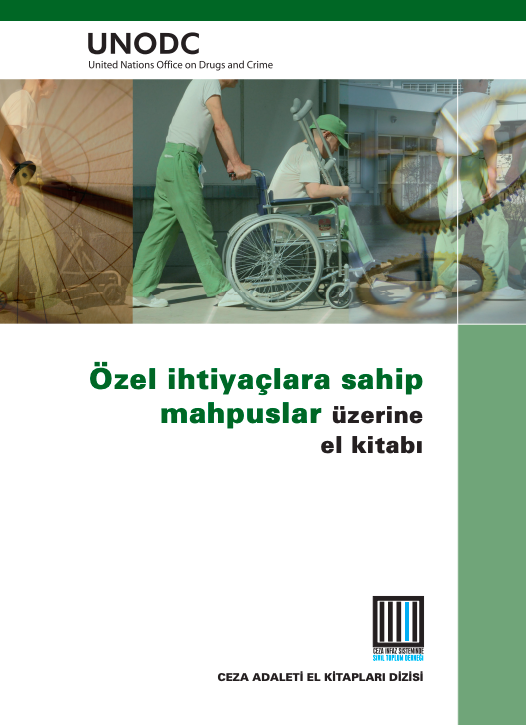
* This text was originally written as the introductory note to the unofficial Turkish edition of the UNODC Handbook on Prisoners with Special Needs, published by CİSST in 2013.
Prisons, as sociologist Erving Goffman famously noted, are “total institutions.” That is, they are institutions that seek to encompass the entirety of life for those held within; they draw rigid boundaries between inside and outside and wield a totalizing form of control over the individuals confined within them. These institutions are closed off in both directions: just as they isolate the inside from the outside world, they also render the outside inaccessible and unknowable to those inside.
This potential for control and isolation impacts some people within prisons more deeply than others. Individuals with mental health needs, people with disabilities, ethnic and racial minorities and Indigenous peoples, foreign nationals, LGBT individuals, the elderly, those with terminal illnesses, and those on death row are just some of the groups of prisoners more likely to be adversely affected by imprisonment.
The first article of the European Prison Rules states: “All persons deprived of their liberty shall be treated with respect for their human rights.” Similarly, core international human rights instruments such as the United Nations’ “Body of Principles for the Protection of All Persons under Any Form of Detention or Imprisonment,” the “Standard Minimum Rules for the Treatment of Prisoners,” and the “Basic Principles for the Treatment of Prisoners” contain comparable provisions. For example, Article 60 of the Standard Minimum Rules states: “The regime of the institution should seek to minimize any differences between prison life and life at liberty which tend to lessen the responsibility of the prisoners or the respect due to their dignity as human beings.”[1]
Turkey’s national legislation also reflects this framework. Article 2 of the Law on the Execution of Sentences and Security Measures stipulates: “No cruel, inhuman, degrading or humiliating treatment shall be permitted in the execution of sentences and security measures.” Similarly, the Handbook on Prison Management published by the Directorate General of Prisons and Detention Houses includes statements such as: “A prison sentence only entails the deprivation of liberty; prison conditions should never be used as an additional form of punishment,” and “All persons deprived of their liberty shall at all times be treated with respect for their inherent human dignity.”
As seen here, both international and national regulations regard imprisonment as fundamentally a human rights issue and emphasize that the experience of confinement must not amount to an additional form of punishment. When it comes to prisoners with special needs, the protection of their rights and the provision of accommodations to meet those needs become not just a matter of good practice, but a human rights obligation. The identification of such prisoner groups and the recognition and fulfillment of their needs must be addressed as a matter of human rights.
For prisoners with special needs, ensuring access to basic rights and services becomes even more critical: physical accommodations, access to health care, and protection from discrimination (based on identity or condition), safety, and specific support are all essential. However, the inherent isolation of prisons and the stigmatization and negative perceptions of prisoners at large often render these needs invisible—even more so for prisoners with special needs. For this reason, addressing the rights and needs of these groups is central to advancing human rights in the prison system. Such efforts can raise awareness, create links between civil society organizations and prison administrations, identify gaps and problems within the system, and develop and advocate for possible solutions.
The book you are holding is a product of the United Nations’ efforts in this area. It focuses on prisoners with special needs and outlines their basic needs and applicable international standards. While primarily directed toward lawmakers, judicial authorities, policymakers, law enforcement officers, prison administrators, social workers, and correctional staff, the book also serves as a resource for civil society organizations and other stakeholders.
At a time when the idea that imprisonment itself constitutes a violation of human rights is becoming increasingly visible, and debates around alternative sanctions are gaining traction, this book contributes meaningfully to those discussions. It clearly outlines the negative impacts of confinement and emphasizes that, particularly for prisoners with special needs, incarceration poses additional risks and should only ever be a measure of last resort. Keeping these discussions in mind while reading will enhance the significance of the text.
The Civil Society in the Penal System Association (CİSST)’s translation of this book and the initiation of its “Prisoners with Special Needs” Project marks an important development. The project aims to raise awareness among the general public and targeted civil society organizations; build coalitions among those groups; establish communication between these organizations and prisoner groups; and, through research and dialogue, identify systemic shortcomings and propose solutions. Creating dedicated websites for each special-needs prisoner group also serves as a valuable repository for accumulating and sharing information. These initiatives are essential components in the broader struggle for human rights in Turkey.
This book will become more valuable to the extent that civil society organizations incorporate it into their work and state institutions take its recommendations seriously. As of now, it remains a singular and much-needed resource on prisoners with special needs in Turkey.
Mustafa Eren
Sociology Alumni Association
January 2013
* This translation was produced with the assistance of ChatGPT and revised by the author.
[1] Updated Note (2025):
This excerpt is taken from Article 60 of the Standard Minimum Rules for the Treatment of Prisoners, originally adopted by the United Nations in 1955. These rules were comprehensively revised in 2015 and reissued as the Nelson Mandela Rules. In the updated version, the relevant provision is now designated as Rule 5, with slight but significant changes in wording that place stronger emphasis on human dignity and individual responsibility.
The revised Rule 5.1 reads:
“The prison regime should seek to minimize any differences between prison life and life at liberty that tend to lessen the responsibility of the prisoners or the respect due to their dignity as human beings.”
Source: United Nations Standard Minimum Rules for the Treatment of Prisoners (the Nelson Mandela Rules), UNODC, 2015.




[…] 🇬🇧 Yazının İngilizce Versiyonu 🔗 Birleşmiş Milletler El Kitabının Tam Metni […]