Preface to the 2026 Edition
The transfer of arrested mayors, as well as journalists, artists, and politicians known for their opposition to the government, to a new generation of high-security prisons commonly referred to as “well-type” (kuyu tipi) prisons has once again brought these institutions to public attention in Turkey. The common characteristic of S-Type, Y-Type, and High Security prisons is that they further extend the system of architectural solitary confinement first institutionalized with F-Type prisons.
Since 2020, the number of these prisons, constructed and opened with little public attention, has increased rapidly. As of 1 July 2026, of Turkey’s 402 prisons, 7 are S-Type, 22 are High Security, and 12 are Y-Type institutions. When the 13 F-Type prisons, 1 D-Type prison, and the Erzurum H-Type High Security Prison—which was later converted into a cell-based institution—are included, the total number of prisons built around a regime of solitary confinement reaches 56. According to official figures, these institutions have a combined capacity of 34,342 prisoners.
As criticism grows that the judiciary has been transformed into a cudgel of political power, and that prisons increasingly function as mechanisms of punishment, intimidation, and hostage-taking, solitary confinement has become one of the central elements of this system. For this reason, I believe that this article—first published in Bianet in June 2012, in which I discuss solitary confinement through Jacques Lacan’s concept of the Real—has lost none of its relevance.
Solitary confinement is a form of torture that is difficult to articulate, invisible, and silent. Both the F-Type prisons and the new generation of high-security prisons now widely known as “well-type” prisons constitute architectural embodiments of this form of torture. At a time when the government has once again placed the rhetoric of “democratization” on the political agenda, a serious discussion of solitary confinement and the penal regime that makes it possible remains one of the clearest tests of that claim.
The article below was originally published in Bianet in June 2012.
Suppose you fall in love. How would you describe it? Search the word love online and you will find countless definitions and descriptions. Everyone attempts to explain it through their own experience: “It sweeps you off your feet,” “You can think of no one else,” “You lose your appetite,” “You would cross mountains and deserts,” “Unrequited love is the truest love.” You can even find explanations of its biochemical foundations.[1]
Yet can love, defined in a dictionary as “an intense feeling of affection and devotion,” or explained through its chemical processes, ever truly convey what it feels like to be in love? Would such descriptions not be even less adequate than the proverbial blind person’s attempt to describe an elephant?
Or imagine that you suffer from acrophobia. How could you explain your fear to someone who has never been afraid of heights? Unless they have experienced something comparable, the only way to make them understand would be by drawing analogies with fears they already know. Otherwise, how could that feeling, that fear, ever be put into words?
And what if the experience in question is something your listener has never encountered, not even in a similar form? Have you never struggled to explain an experience, only to abandon the effort altogether?
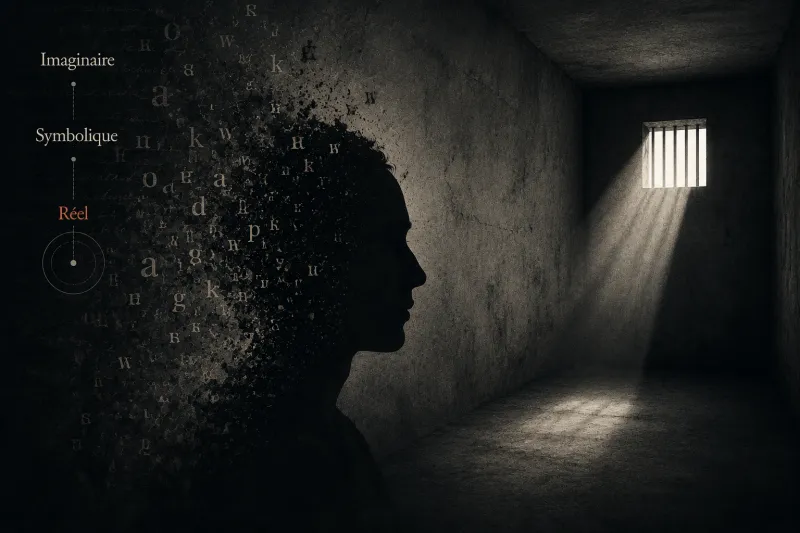
Jacques Lacan uses the term the Real (le Réel) to designate that which cannot be symbolized. Here, “the Real” should not be understood as reality in its ordinary sense. Rather, together with the Imaginary and the Symbolic,[2] it constitutes one of the three registers of psychic life. As J. D. Nasio explains, it is “that unknown which always lies ahead of us, that which cannot be named, symbolized, or imagined.”[3] In other words, the Real is that which has no signified; it exists as a pure signifier.
Can Lacan’s concept of the Real also help us better understand imprisonment? Is imprisonment itself a form of the Real? More specifically, can imprisonment under conditions of prolonged solitary confinement, closely associated with sensory deprivation, be understood as the Real? Can the experience of imprisonment in Turkey’s F-Type prisons [High-security prisons built around one and three person isolation cells][4] which were introduced following the bloody prison operation officially named Operation Return to Life on 19 December 2000 and subsequently became the setting for the Death Fast Resistance that claimed the lives of 122 prisoners, be reconsidered through the lens of the Real?
Imprisonment and Solitary Confinement as Experiences Beyond Description
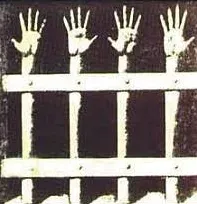
Can imprisonment ever truly be described? Can imprisonment, particularly under harsh conditions, be put into words? Can a person translate the torture they have endured into language and make it intelligible? If imprisonment and torture are themselves the subject, do words not become even more inadequate? Perhaps simply this: “You are locked behind four walls, serve your sentence, and eventually leave.” Even for someone familiar with Turkey’s prison system, imprisonment may appear to be nothing more than confinement accompanied by occasional ill-treatment.
But how can one describe what it feels like to be held in captivity not for a day, a month, or even a year, but for years on end? Or how can torture itself be described? What does it feel like to have one’s testicles crushed? What happens when electric shocks are applied to the body? What emotions arise from witnessing another person being tortured before your eyes? These are experiences that often defy comprehension even for those who have lived through them. Their effects can be observed, yet the experiences themselves resist meaningful description.
When former prisoners are asked to recount such experiences, one frequently encounters responses like the following: [5]
“Were there particular practices or incidents that you witnessed or experienced during this period?
What we lived through was not a series of isolated incidents. It was an uninterrupted, infernal regime of cruelty. To describe torture by saying, “This happened one day, then something else happened the next,” might perhaps leave the listener or reader with a few horrifying images. But those endless minutes, those days that would not pass, those months, those years—these cannot be conveyed simply by saying, “I witnessed this” or “I experienced that.” Others have written about it. But how much can anyone write? Whatever is written remains inadequate.
Even listening to accounts of the September 12 period, and particularly those concerning this prison, is deeply difficult for people.
You are right to find it difficult. I myself struggle to speak about it and to write about it.
After your release, were you able to share your experiences with your family?
Only occasionally… A nightmare cannot truly be shared.“
J. D. Nasio, one of Lacan’s students, offers an example strikingly similar to the final sentence above when explaining the Real. Imagine someone who wakes after a terrifying nightmare and, the next morning, attempts to describe it:
“I remember experiencing a similar terror as a child when I saw a shadow climbing the walls of my room.”
According to Nasio, “the Real is precisely the substance of fear itself, the very material of emotion.” It is the emotional experience that remains unchanged despite the passage of decades, the part of our psychic life that time cannot erase or transform.[6] The fear cannot itself be expressed; instead, it is approached indirectly through an earlier experience. The Real cannot be spoken, symbolized, or represented. The moment it is symbolized, it ceases to be the Real.
When the experience in question is not imprisonment in general but solitary confinement as its most extreme form, the effort to describe it becomes even more impossible. Prisoners who have spent years in isolation cells repeatedly insist that “solitary confinement cannot be described.”[7] Instead of describing the experience itself, they attempt to explain it through its consequences.
Former prisoners consistently state that prolonged solitary confinement causes profound psychological and physical destruction. Yet when asked how this destruction occurs, they struggle to answer. Put simply, there exists a kind of box that gradually renders healthy people physically and psychologically ill. Those who enter it healthy emerge profoundly changed, yet they cannot explain what happened inside or why it produced such devastating effects. Precisely because the mechanism remains so difficult to articulate, the box itself continues to appear almost mysterious, almost supernatural.
Günter Sonnenberg, a member of the Red Army Faction (RAF) who spent sixteen years imprisoned in Stuttgart-Stammheim, described solitary confinement in these words:
“The problem is this: when a person remains in a closed room for a long time, hearing no sounds, seeing no one, unable even to look out of a window, when there are no sensory stimuli at all, the person becomes ill. Human beings need stimuli and responses from others. When these disappear, isolation sets in, and one begins to break down.”[8]
What Sonnenberg calls the absence of stimuli is known scientifically as sensory deprivation. Human beings exist only through their senses and through their relationships with other people. When deprived of both, psychological disturbance becomes almost inevitable. Here Lacan’s understanding of the Symbolic becomes particularly illuminating. The individual, the One, cannot exist in isolation but always exists in relation to others. Every signifier acquires meaning only through its relation to other signifiers. The Symbolic therefore consists of at least two elements: the One and the Others.[9] To force the One into absolute isolation is therefore to initiate a process of destruction.
“It is torture. Torture that leaves no evidence. There are no wounds on the body, no visible proof. Yet you know it is happening because your consciousness begins to dissolve. Your memory deteriorates. The boundary between reality and imagination disappears, and you begin to confuse the two. Under such conditions, you even forget how to speak, because there is no one with whom you can speak.”[10]
A person who can neither relate to others nor speak, hear, or touch inevitably turns inward in the absence of others. One may immobilize the body, yet the mind continues to function. It continues to think. What it produces, however, cannot remain under external control forever. Over time it may escape control altogether. This is precisely why findings suggesting that prolonged solitary confinement can produce schizophrenia-like symptoms deserve serious attention.[11]
Another former prisoner, Andreas Vogel, who also spent years in solitary confinement, described the experience as follows: [12]
“You are constantly talking to yourself. While talking to yourself, you believe you are actually speaking with other people. But you are not, you are speaking only inside your own head, and you cannot recognize this. Sometimes this continues even years later. Solitary confinement drives a person inward. You become both the object of the attack and its target. To spend all your time confronting yourself is extraordinarily difficult.”
Perhaps no testimony illustrates both the indescribability of solitary confinement and its devastating psychological effects more vividly than the letters of Ulrike Meinhof. One of the leading figures of the Red Army Faction (RAF), Meinhof was imprisoned in 1972 and was found dead in her prison cell on 9 May 1976, during the fourth year of her imprisonment. In one of her letters she attempted to describe solitary confinement: [13]
Buried Alive by Bullets
16 June 1972 – 9 February 1973
The feeling that something is exploding inside your head—as though your skull is about to burst.
The sensation that your spinal cord is being forced upward into your brain.
The feeling that your brain is shrivelling like dried fruit.
A constant sense of tension, as though you are being controlled by remote control.
The feeling that your heart is leaving your body through urination, as though you can no longer hold your own fluids.
The feeling that the cell itself is moving. You wake up, open your eyes, and the cell is moving. Then, when sunlight enters in the afternoon, it suddenly stops. You cannot stop the sensation that it is moving.
You cannot tell whether you are trembling from cold or from fever. You cannot make sense of why you are shaking.
Speaking in a normal voice requires enormous effort, as much effort as shouting.
The feeling that your tongue is paralysed. You can no longer recognize the meanings of words; you merely guess them. You become unable to tolerate hissing sounds. Guards, visits, exercise periods, all begin to resemble hallucinations.
Headaches.
Flashes of lightning.
Grammar, sentence structure, syntax, none of them remain under your control. While writing the second line of a page, you have already forgotten how the first line began.
The feeling that your insides are burning.
Whenever you try to explain what is happening or what might be happening, you experience the sensation of throwing boiling water into another person’s face or as though it were boiling gasoline capable of consuming an entire human body. An overwhelming aggression that has nowhere to go. That is the worst part.
The clear awareness that you have no chance of survival.
Complete failure.
The inability to explain any of it.
Nothing remains from visits. Half an hour later you struggle mechanically to remember whether the visit took place today or last week.
Bathing once a week feels like briefly coming up for air. The sensation of relief lasts only a few hours.
The feeling that time and space have collapsed into one another.
The feeling that your body has lost its shape.
Staggering.
Then, suddenly, overwhelming joy simply from hearing something that reminds you of the acoustic difference between night and day.
The feeling that time flows over you again and again; that your brain expands again and again; that your spinal cord sinks downward again and again, for weeks.
The sensation that your skin has been peeled away.
Second Stay in the Dead Wing (December 1973)
You wake up to a roaring sound in your ears, convinced that you are being beaten.
The feeling that your body hangs loose and lifeless.
The sensation of existing inside a vacuum, as though you have been sealed inside a bullet.
Then comes shock, as though an iron plate has fallen onto your head.
The comparisons that come to mind: a grinding machine, skin stretched by speed, a space simulation capsule, Kafka’s Penal Colony, a man lying on a bed of nails, an endless ride on a carousel.
The radio brings only the slightest relief, like slowing from 240 kilometers per hour to 190.
The fact that all of this occurs in a cell physically indistinguishable from any other makes communication with those who have never experienced sensory isolation virtually impossible.
It also confuses the prisoner. (The whiteness of the cells, like military hospital rooms, intensifies the terror, but only together with the silence. Once you realize this, you begin painting the walls.)
Naturally, under such circumstances, one begins to prefer death.
Nils Milberg, who experienced similar conditions in the empty prison hospital wing at Frankfurt-Preungesheim, accused the judge of trying to kill him.
What actually takes place is an execution carried out from within. It is as though one’s interior dissolves, like substances melting in acid. Concentrating all one’s energy on resistance may slow the process, but it cannot prevent its effects entirely.
Part of the insidiousness lies in being stripped of one’s personhood.
In this permanent state of exception, no one exists except yourself.
Meinhof does not describe solitary confinement directly. Instead, she attempts to make it intelligible by drawing upon previous experiences and metaphors. Two expressions in particular deserve emphasis: “dissolving from within” and “being stripped of one’s personhood.” It is here that we must return once more to Lacan.
Explaining the Symbolic through his notion of the Symbolic Father, J. D. Nasio writes: [14]
“The Symbolic Father is not the symbolic representation of paternal authority, but rather a unique signifier that organizes psychic life and guarantees its coherence. For clinicians, the concept of the Symbolic Father is particularly useful in explaining the mechanism underlying psychosis. In psychosis, mental life collapses because the signifier that organizes psychic functioning, the Symbolic Father, has, like a blown fuse, ceased to operate.”
Through sensory deprivation, solitary confinement destroys precisely what Lacan identifies as the Symbolic order. This conclusion has also been supported by numerous scientific experiments and has long entered the medical literature.
Among the most influential are the sensory deprivation experiments conducted at McGill University in 1954,[15] the Camera Silens experiments initiated at Hamburg University Hospital in 1971,[16] and the studies carried out by Jan Gross and Ludvik Svab.[17]
Following their experiments in the early 1950s, Gross and Svab summarized some of their findings as follows: [18]
“After an initial period during which the subjects generally slept, they gradually lost their sense of calm and relief. Their capacity for controlled thinking also deteriorated. Their emotional states fluctuated between apathy, irritability, and distress, accompanied by restlessness, fatigue, and headaches.”
They further observed:
“Even when offered additional financial compensation, the participants proved unable to continue the experiments for another two or three days. For some, the conditions became so unbearable that the planned psychological assessments had to be terminated prematurely.”
Taken together, these experiments clearly demonstrate the destructive effects of sensory deprivation on the human mind and strongly support Lacan’s assertion that the One cannot exist in complete isolation.
This is precisely what distinguishes solitary confinement from other forms of imprisonment. It is also what makes it so extraordinarily difficult to describe or understand. Even those who have endured it often cannot fully comprehend what happened to them. They know only that they lived through it.
Solitary Confinement as the Destruction of the Subject
According to Lacan, the subject is constituted within the Symbolic order. As he writes, “The subject comes into being as a signifier within the Symbolic.”[19]
Yet solitary confinement targets precisely this Symbolic order. It attacks the very structure through which the subject is constituted.
The testimonies of prisoners, together with Lacanian theory, therefore lead us toward a compelling conclusion:
Solitary confinement emerges as an experience that destroys both the subject and personal identity.
This is one of the principal reasons why it resists description and comprehension. Solitary confinement does not merely inflict suffering upon the individual. It undermines perception itself and gradually dissolves psychic integrity.
Viewed from this perspective, one conclusion becomes almost unavoidable:
Yes, solitary confinement is a form of the Real. It cannot truly be represented or adequately explained. At best, one may speak of it through its consequences. And yes, solitary confinement is torture. For that reason, every criticism directed against it is fully justified.
Translation Note: This English translation was prepared with the assistance of artificial intelligence and subsequently reviewed, edited, and approved by the author. The author assumes full responsibility for the accuracy and final wording of the translation.
Bibliography
Düzkan, Ayşe. 5 No’luda Neler Oldu [What Happened in No. 5?] (Interview with Yılmaz Yalçıner). https://web.archive.org/web/20120918171733/http://www.diyarbakirzindani.com/index.php?option=com_content&task=view&id=235&Itemid=34
Gençtan, Engin. İnsanın Dirimsel Gereksinmeleri Olarak Duyumsal Uyarılma ve Uyku [Sensory Stimulation and Sleep as Vital Human Needs]. https://dergipark.org.tr/tr/pub/auebfd/article/618999
Karabey, Hüseyin. Sessiz Ölüm [Silent Death]. Istanbul: Metis Yayınları, February 2002.
MonoKL, Summer 2009, Nos. VI–VII.
Eren, Mustafa. Ceza İnfaz Kurumu Yönetimi El Kitabı Üzerine Bir Değerlendirme – Hapishanelere İlişkin Avrupa Kriterlerinin ve Türkiye Pratiğinin Bir Belge Üzerinden Okunması [An Evaluation of the Prison Administration Handbook: Reading European Prison Standards and Turkish Practice through a Policy Document]. https://mustafaeren.net/yazilar/ceza-infaz-kurumu-yonetimi-el-kitabi-uzerinde-bir-degerlendirme-hapishanelere-iliskin-avrupa-kriterlerinin-ve-turkiye-pratiginin-bir-belge-uzerinden-okunmasi/
Tura, Saffet Murat. Freud’dan Lacan’a Psikanaliz [From Freud to Lacan: Psychoanalysis]. Istanbul: Kanat Kitap, March 2007.
Kurnaz, Selami. Tecrit – Yaşayanlar Anlatıyor [Solitary Confinement: Survivors Tell Their Stories]. Istanbul: Boran Yayınevi, August 2005.
Şizofreni de Depresyon Olur mu [Can Schizophrenia Be Accompanied by Depression?]. Hürriyet, 27 April 2009. https://www.hurriyet.com.tr/kelebek/sizofreni-de-depresyon-olur-mu-11503884
Koşan, Ümit. Sessiz Ölüm [Silent Death]. Istanbul: Metis Yayınları, April 2000.
Endnotes
[1] Wikipedia (accessed 16 December 2010). https://tr.wikipedia.org/wiki/A%C5%9Fk
[2] Bülent Somay, who teaches psychoanalysis at Istanbul Bilgi University, translates Lacan’s three registers as the Imaginary (muhayyel), the Symbolic (sembolik), and the Real (Gerçek). Accordingly, throughout this article the concept of the Real is written with a capital R, following this convention.
[3] J. D. Nasio, The Fundamental Concepts of Jacques Lacan’s Theory, trans. Atakan Karakış, MonoKL, Summer 2009, Nos. VI–VII, p. 51.
[4] The Turkish term tecrit (solitary confinement) refers to the practice of holding prisoners in isolated cells, separated from one another. In Turkey, F-Type prisons are high-security prisons composed of one- and three-person cells designed around long-term isolation. For a more detailed discussion of F-Type prisons and solitary confinement, see the author’s article An Evaluation of the Prison Administration Handbook: Reading European Prison Standards and Turkish Practice through a Policy Document. https://mustafaeren.net/yazilar/ceza-infaz-kurumu-yonetimi-el-kitabi-uzerinde-bir-degerlendirme-hapishanelere-iliskin-avrupa-kriterlerinin-ve-turkiye-pratiginin-bir-belge-uzerinden-okunmasi/
[5] From Ayşe Düzkan’s interview with Yılmaz Yalçıner, who was imprisoned in Diyarbakır Prison during the military coup period following 12 September 1980.
[6] J. D. Nasio, p. 49.
[7] Three books were consulted for prisoners’ testimonies on solitary confinement. Hüseyin Karabey’s and Ümit Koşan’s Sessiz Ölüm include interviews with former prisoners who experienced solitary confinement in Germany, Spain, Northern Ireland, Italy, and the United States. Selami Kurnaz’s Tecrit: Yaşayanlar Anlatıyor presents testimonies from prisoners held in Turkish prisons.
[8] Hüseyin Karabey, Sessiz Ölüm. Istanbul: Metis Yayınları, February 2002, p. 40.
[9] J. D. Nasio, p. 50.
[10] Hüseyin Karabey, p. 40.
[11] In an interview, Professor Kemal Arıkan, a consultation-liaison psychiatrist at the Memory Center Neuropsychiatry Clinic, answered the question “What are the risk factors for schizophrenia?” as follows: “The greatest risk factor is genetic predisposition. It is also suggested that prolonged sensory isolation—that is, deprivation of sensory stimuli such as sound and visual input—may produce a schizophrenia-like condition.” Can Schizophrenia Be Accompanied by Depression?, Hürriyet, 27 April 2009.
[12] Hüseyin Karabey, p. 51.
[13] Hüseyin Karabey, pp. 130–132.
[14] J. D. Nasio, p. 49.
[15] Engin Gençtan, Sensory Stimulation and Sleep as Vital Human Needs (accessed 16 January 2010).
[16] Ümit Koşan, Sessiz Ölüm. Istanbul: Metis Yayınları, April 2000.
[17] Examples from these experiments are discussed in Hüseyin Karabey’s Sessiz Ölüm.
[18] Ümit Koşan, pp. 54–55.
[19] Saffet Murat Tura, From Freud to Lacan: Psychoanalysis. Istanbul: Kanat Kitap, March 2007, p. 205.